

Recommended
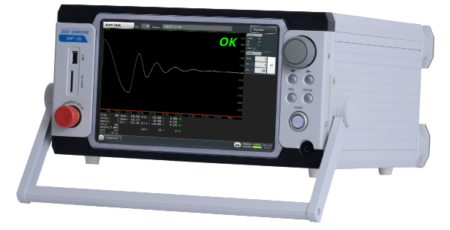
ECG KOKUSAI DWIT-05 Impulse Winding Tester
New-generation, high-resolution impulse winding tester covering a broad 5 μH to 1 H inductance range.
View DWIT-05
Motor · Coil · Inductor · Stator · Armature
Start with what you need to test—not a model number.
Choose your requirement and see the most suitable ECG KOKUSAI solutions.
Impulse winding testing, low-inductance testing, partial discharge, higher test voltage, and production-line inspection.
START HERE
Select one option. The recommended products below will change instantly.
Standard impulse winding inspection
For routine, nondestructive winding inspection using impulse waveform comparison to detect turn differences, layer shorts, winding abnormalities, and insulation-related defects.
Recommended for this requirement
New-generation, high-resolution impulse winding tester covering a broad 5 μH to 1 H inductance range.
View DWIT-05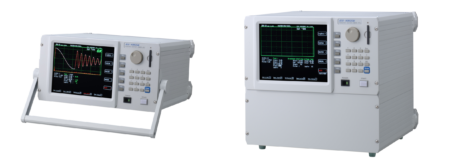
Established DWX-01A / 05A / 10A platform for general coil inspection, selected according to required test voltage and application.
View DWX SeriesPrecision and ultra-low-inductance testing
For power inductors, chip inductors, and other low-inductance components where fast waveform capture and a test circuit optimized for low-L measurements are required.
Recommended for this requirement
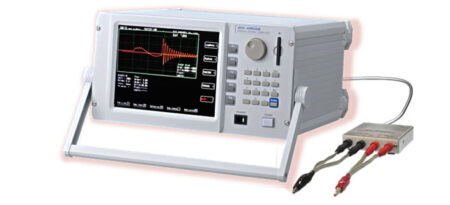
Dedicated low-inductance family: DWX-300LI for precision testing and DWX-01LI for ultra-low-inductance / high-speed applications.
View DWX-300LI / DWX-01LIPD / PDIV and insulation evaluation
Choose the PD approach by test method: impulse partial-discharge testing, AC partial-discharge testing, or an integrated system combining AC, impulse, and insulation evaluation.
Recommended for this requirement
Featured DWIT platform for high-resolution impulse winding inspection with partial-discharge evaluation.
View DWIT-05PD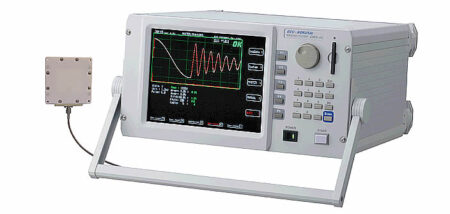
Impulse winding and partial-discharge testing solution for coil and motor-winding insulation evaluation.
View DWX-05PD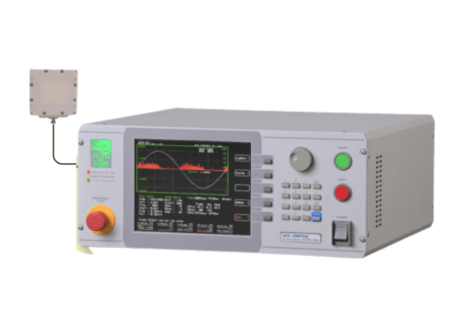
For AC partial-discharge evaluation up to 5 kVrms, including PD inception / extinction and discharge-level assessment.
View ACPD-05X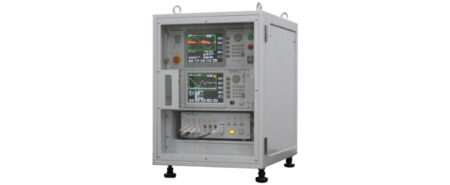
Integrated motor-coil system combining AC PD, impulse PD, withstand-voltage testing, and multi-channel circuit switching.
View PD ONEHigher impulse test-voltage requirements
For windings and insulation systems that require higher impulse test voltage, including applications beyond the standard 5 kV class.
Recommended for this requirement
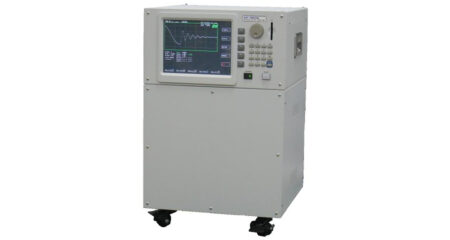
15 kV-class impulse winding testing, with DWX-15PD available when partial-discharge evaluation is also required.
View DWX-15 / DWX-15PD
DWX-10A provides up to 10 kV impulse testing for applications between the standard and 15 kV classes.
View DWX SeriesAutomated and end-of-line inspection
For manufacturing environments that need integrated electrical inspection, automated pass/fail workflows, circuit switching, data handling, or dedicated stator / armature testing.
Recommended for this requirement
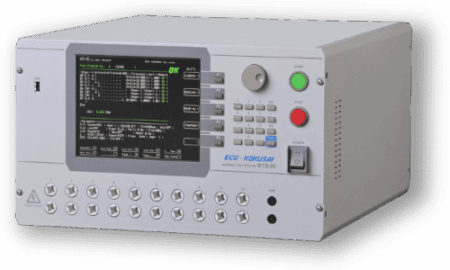
All-in-one winding test platform for motor, transformer, and coil inspection.
View WTS-05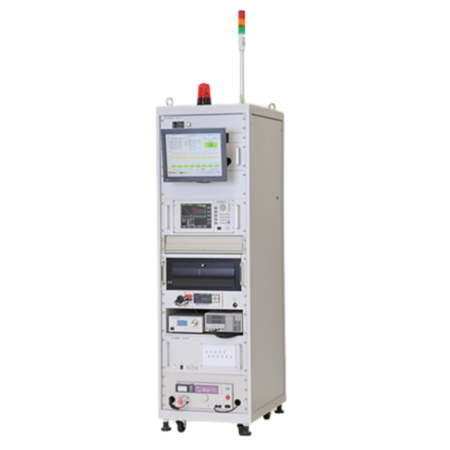
Custom integrated system combining impulse, resistance, insulation, rotation, and other stator inspection functions.
View Stator Coil Test System
Automatic combined-control test system for armature coil inspection and production quality control.
View Armature Coil Test System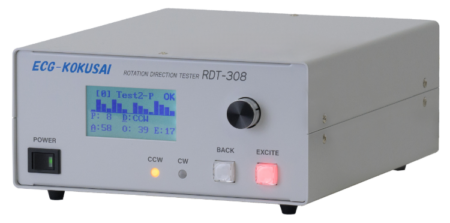
Dedicated stator-coil inspection for rotation direction, wrong winding, connection errors, and magnetic-flux distribution.
View RDT-308Need help choosing?
You do not need to know the ECG KOKUSAI model in advance. Start with your test object and electrical requirements.
Winding Test Applications
Winding-test requirements change with the device under test, inductance, insulation system, test voltage, production environment, and whether partial-discharge evaluation is required. Start with the electrical and manufacturing requirement, then select the tester or integrated system.
Impulse waveform comparison is used for nondestructive winding inspection where differences in turns, layer shorts, winding abnormalities, or insulation-related defects need to be identified during R&D or production testing.
Low-inductance parts require a test circuit and waveform-capture capability suited to fast electrical behavior. This is especially relevant to power inductors, chip inductors, and high-speed production inspection.
Motor windings, stators, and higher-stress insulation systems may require partial-discharge evaluation in addition to conventional impulse comparison. The appropriate method can be impulse PD, AC PD, or an integrated insulation-test system.
Manufacturing environments may require automated pass/fail judgment, circuit switching, multiple electrical tests, data handling, and dedicated stator or armature inspection rather than a standalone laboratory tester.
Test Method
These methods answer different questions about a winding or insulation system. The correct test architecture depends on the defect or condition you need to evaluate.
Applies a short impulse to the winding and compares waveform behavior to identify differences associated with winding construction or insulation faults.
Evaluates discharge activity in the insulation system when PD / PDIV behavior is part of the development or quality requirement.
Combines winding inspection with additional electrical tests, switching, automation, and pass/fail workflows for production or end-of-line environments.
How to Select
Model selection should follow the DUT and electrical requirement. The table below summarizes the first parameters to define before selecting the ECG KOKUSAI platform.
| Selection factor | Why it matters | Typical examples |
|---|---|---|
| Test object | Defines the winding structure and suitable inspection approach. | Motor, stator, armature, coil, inductor, transformer, solenoid |
| Inductance range | Low-inductance devices can require dedicated circuitry and faster waveform behavior. | General windings vs. power and chip inductors |
| Required test voltage | Determines whether a standard or higher-voltage impulse platform is required. | Standard class, 10 kV class, 15 kV class |
| Partial-discharge requirement | Determines whether impulse comparison alone is sufficient or PD / PDIV evaluation is also required. | No PD, impulse PD, AC PD, integrated PD |
| Test environment | Changes the need for switching, automation, data handling, and pass/fail integration. | R&D, bench inspection, production, end-of-line |
Frequently Asked Questions
An impulse winding tester compares electrical waveform behavior after a short impulse is applied to the winding. Differences can indicate turn differences, layer shorts, winding abnormalities, or insulation-related defects. The exact judgment method depends on the tester and application.
A dedicated low-inductance solution is appropriate when the DUT has very low inductance and requires a test circuit and waveform-capture behavior optimized for fast electrical response, such as power or chip inductors.
Impulse winding testing evaluates waveform differences associated with winding and insulation behavior. Partial-discharge testing specifically evaluates discharge activity in the insulation system. Some applications require one method, while others use both.
Higher test voltage may be required when the winding or insulation system must be evaluated above the standard test-voltage range. The required voltage should come from the DUT specification, internal validation plan, or applicable test requirement.
Provide the test object, approximate inductance range, required impulse voltage, whether PD / PDIV evaluation is needed, and whether the system will be used for R&D, bench inspection, or automated production testing.
Application Support
Share the DUT type, inductance range, required impulse voltage, partial-discharge requirement, production environment, and automation needs. Denkei Americas can help narrow the appropriate ECG KOKUSAI test approach and configuration.