


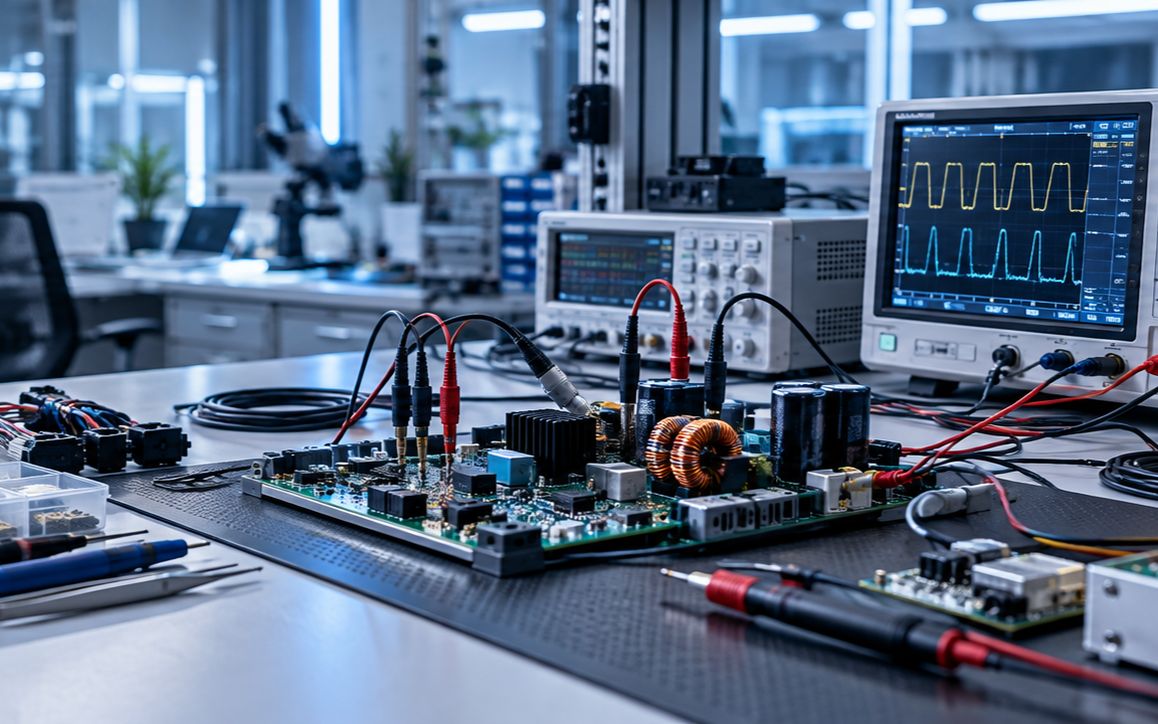
Electrical & Component Testing Solutions
Explore solution paths for electrical components, windings and insulation, power electronics, programmable DC and AC power, electronic loading, and battery-simulation test workflows.
Choose the Requirement That Best Matches Your Project
This hub is organized around engineering requirements rather than manufacturer names. Choose the closest objective below to reach the relevant solution pages and product paths.
Component & Insulation Testing
Evaluate windings, coils, insulation, electrical safety, and production electrical quality.
Power Electronics & Source / Load Testing
Supply, absorb, simulate, and vary electrical power for converters, inverters, power supplies, batteries, and powered devices.
Evaluate Electrical Components, Windings & Insulation
Start here when the test object itself is the component, winding, coil, insulation system, or battery-related electrical assembly. Select the route based on what must be inspected or verified.
Impulse Winding & Coil Testing
Find suitable approaches for general winding inspection, low-inductance coils, partial discharge, higher test voltages, and production-line testing.
Electrical Safety & Insulation Testing
Browse existing equipment for insulation resistance, withstand-voltage, electrical safety, and related insulation evaluation requirements.
Supply, Absorb & Simulate Power Around the DUT
Use these solution paths when the project depends on controlled input power, programmable DC or AC conditions, source/sink operation, battery simulation, or repeatable electronic loading.
EV Power Electronics Testing
Configure test approaches for on-board chargers, DC-DC converters, traction inverters, and battery simulation around the DUT requirements.
DC Power & Bidirectional Testing
Configure programmable DC source, source/sink, battery-simulation, and higher-power DC systems based on voltage, current, power, and energy-flow direction.
Electronic Load Testing
Select general, dynamic, high-voltage, regenerative, or multichannel DC loading architectures around the DUT output and required load profile.
AC Power & Grid Simulation
Reproduce programmable AC input conditions, voltage and frequency variation, power-line disturbances, multi-phase systems, and supported regenerative AC workflows.
What Should You Define First?
Product selection becomes easier once the DUT, electrical range, test objective, and operating conditions are clear. Denkei can then coordinate suitable source, load, winding, insulation, and safety-test technologies around those requirements.
Define the DUT or electrical system
Identify what is being tested: winding, power converter, power supply, battery-related assembly, electrical installation, or other component/system.
Define the test objective
Determine whether you need to inspect, source power, absorb power, simulate conditions, measure performance, or troubleshoot an electrical issue.
Define the electrical range
Voltage, current, power, frequency, channel count, direction of energy flow, and expected transient behavior can determine the appropriate architecture.
Define the operating environment
Clarify whether the system is for R&D, production, automated test, quality control, maintenance, commissioning, or field use.
Coordinate the complete configuration
Where multiple instruments, manufacturers, accessories, or supporting services are needed, Denkei can help coordinate the overall solution path.
Tell Us What You Need to Test or Measure
You do not need to know the exact manufacturer or model. Share the DUT, measurement objective, electrical range, and project requirements, and Denkei can help identify the appropriate solution path.