Home » Electronic Measuring Instruments » Power Supplies & Electronic Loads » Electronic Load » KIKUSUI PXZ Series High-Capacity Regenerative Electronic Load

KIKUSUI PXZ Series High-Capacity Regenerative Electronic Load

KIKUSUI
Supplier / Manufacturer: KIKUSUI
Model: PXZ Series

Industries & Applications:
Contact Us

KIKUSUI PXZ Series Regenerative Electronic Load

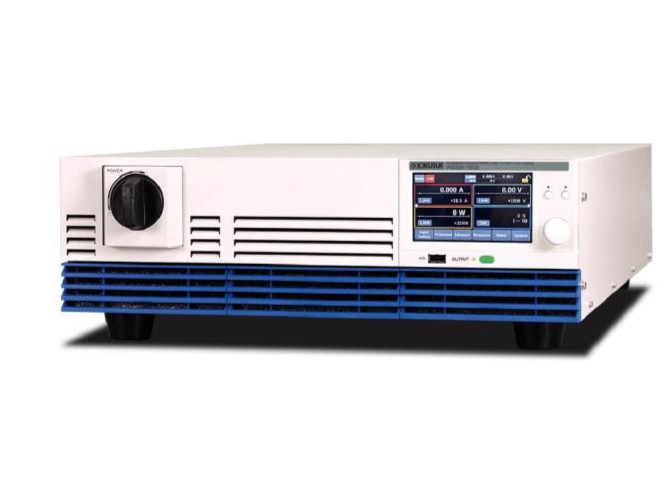
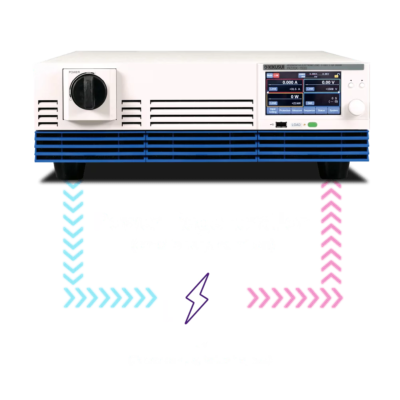
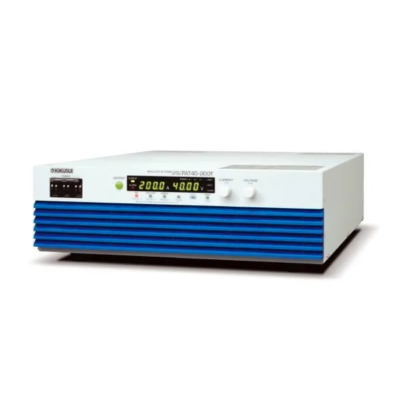
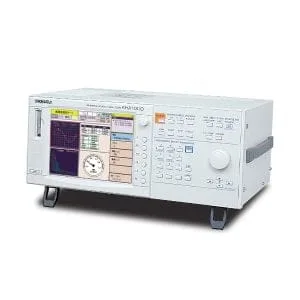
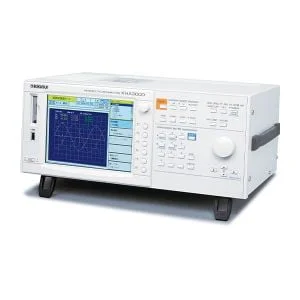
The KIKUSUI PXZ Series is a high-capacity regenerative electronic load designed for efficient testing of high-power DC devices and power-electronics systems. Each model provides 20 kW of rated load power in a compact 3U chassis.

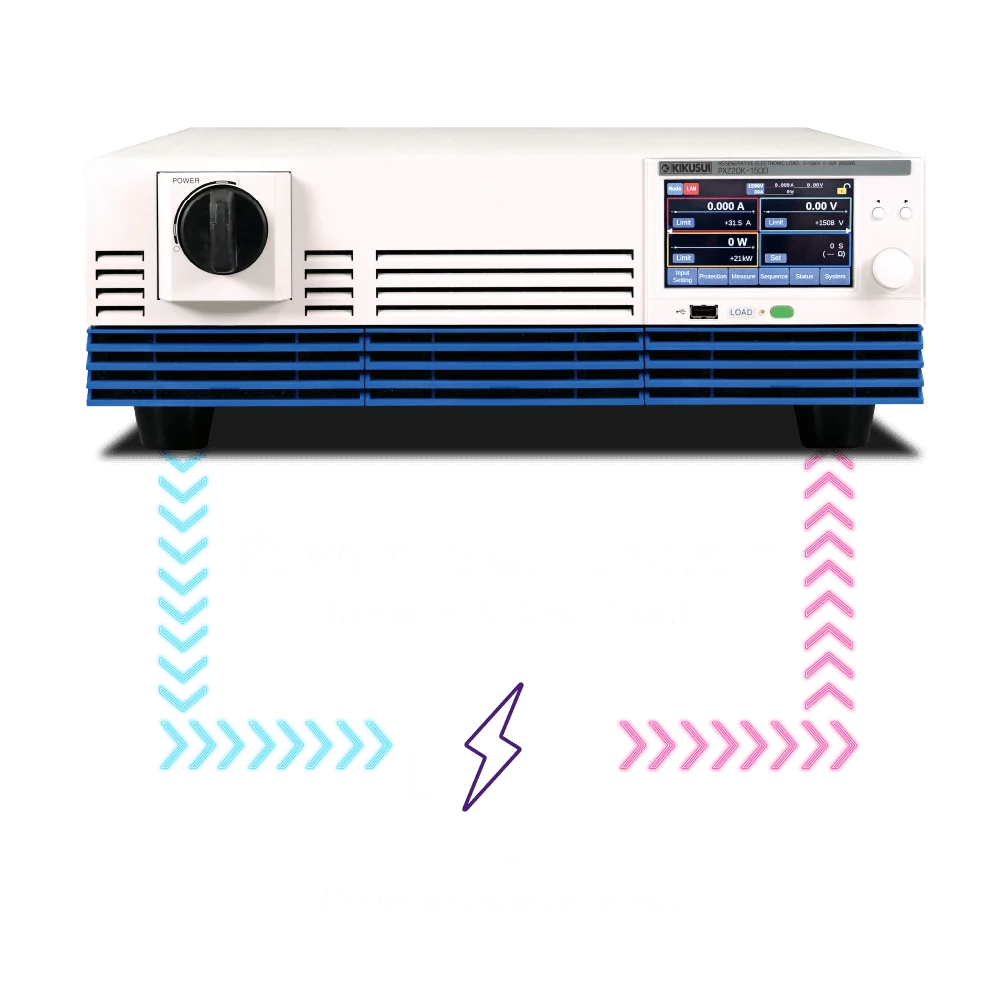
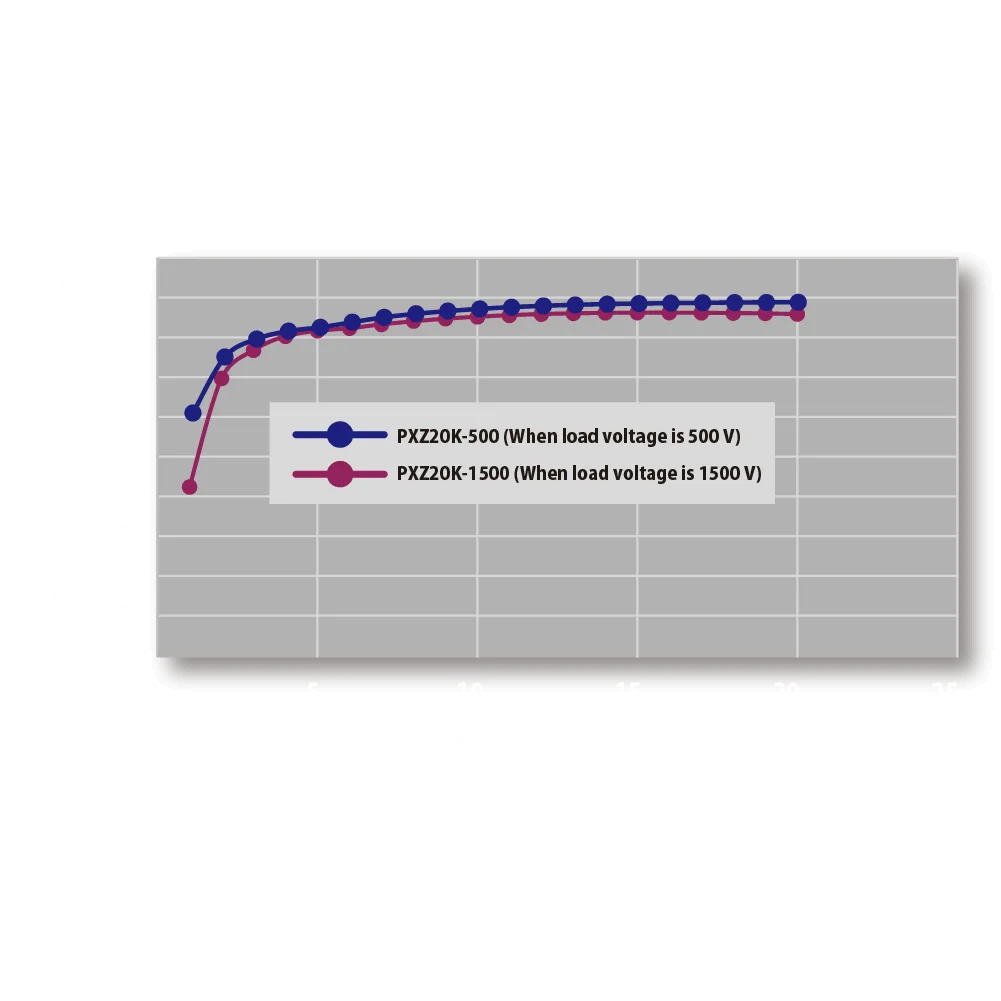
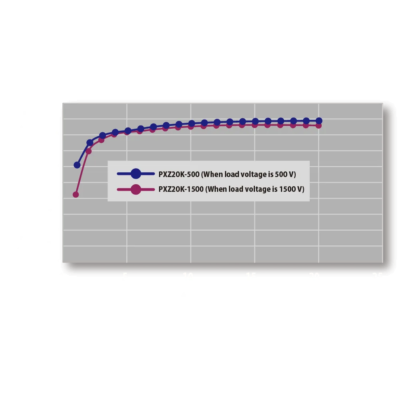
Unlike a conventional electronic load that primarily converts absorbed power into heat, the PXZ Series regenerates absorbed energy for consumption within the facility. Regenerative efficiency exceeds 90% at load power of 6 kW or more, helping reduce energy loss and heat generation during high-power testing.

20 kW / 3U High-capacity regenerative loading in a compact chassis
Up to 1500 V Four models for low-voltage/high-current through high-voltage testing
90%+ Regeneration High-efficiency on-site energy regeneration at load power of 6 kW or more
Up to 500 kW Parallel operation of up to 25 PXZ units

Four operating modes—constant current (CC), constant voltage (CV), constant resistance (CR), and constant power (CP)—are supported. The PXZ Series also provides programmable sequence operation, pulse and sine functions, configurable I-V characteristics, synchronization, data acquisition, external control, and LAN, USB, and RS232C interfaces for integration into automated test systems.

The PXZ Series is intended for on-site regenerative operation. It is not a grid-interconnection device designed to return regenerated power to the utility grid.

20 kW Regenerative Load in 3U

Each PXZ model provides 20 kW of rated load power in a compact 3U chassis, supporting high-capacity DC testing while reducing rack-space requirements.

High-Efficiency Power Regeneration

Regenerative efficiency exceeds 90% at load power of 6 kW or more. Absorbed energy can be reused within the facility rather than being dissipated only as heat.

CC / CV / CR / CP Operation

Constant-current, constant-voltage, constant-resistance, and constant-power operating modes support a wide range of DC load-test conditions.

Dynamic Load Functions

Pulse operation is available in CV, CC, and CR modes, while sine operation is available in CV and CC modes. Both support frequencies from 1 Hz to 1000 Hz.

Programmable Sequence Testing

Up to 30 programs and a combined maximum of 10,000 steps can be stored. Step execution time ranges from 1 ms to 3,600,000 seconds for automated load-profile testing.

I-V Characteristic Function

Arbitrary I-V characteristics can be defined using 3 to 100 points in CC or CV operation, supporting evaluation against device-specific voltage-current characteristics.

Pre-Charge Function

A dedicated pre-charge function can apply 5% of rated current in CC mode until the selected CV voltage is reached, supporting controlled charging of DC-link capacitors before discharge testing.

Parallel and Synchronized Operation

Up to 25 PXZ units can be operated in parallel for systems up to 500 kW. Load on/off, measurement, and sequence timing can also be synchronized across multiple units.

Integrated Measurement and Data Logging

The PXZ supports voltage, current, power, integrated current, and integrated power measurement together with configurable measurement triggering and data logging.

Standard System Interfaces

LAN, USB, RS232C, isolated external analog control, and configurable digital I/O are provided for integration with automated test equipment and PLC-based systems.

VMCB Multi-Channel Control

KIKUSUI's Virtual Multi-Channel Bus function allows multiple PXZ units to be grouped for efficient remote control and monitoring over a network.

Comprehensive Protection

Protection functions include overvoltage, overcurrent, overpower, undervoltage, overtemperature, communication watchdog, reverse-connection, AC-line, sensing, external-alarm, and parallel-operation protections.

High-power DC power supply evaluation
EV and automotive power-electronics testing
OBC and inverter DC-link discharge testing
DC/DC converter evaluation
Rechargeable battery discharge and I-V characteristic evaluation
High-voltage power-conversion system testing
Automated production and endurance testing
Data-center and IT power-supply evaluation

PXZ Series Model Comparison

SpecificationPXZ20K-50PXZ20K-500PXZ20K-1000PXZ20K-1500
Rated Power20 kW20 kW20 kW20 kW
Operating Voltage (DC)3 V to 50 V10 V to 500 V20 V to 1000 V30 V to 1500 V
Rated Current800 A120 A60 A30 A
Maximum Settable Voltage52.5 V525 V1050 V1575 V
Maximum Settable Current840 A126 A63 A31.5 A
CC Setting Resolution0.1 A0.01 A0.005 A0.002 A
CV Setting Resolution0.005 V0.05 V0.1 V0.1 V
CC Rise Time (TYP)1 ms1 ms1 ms1 ms
CC Fall Time (TYP)1 ms1 ms1 ms1 ms
Remote-Sensing Compensation (TYP)10% of rated voltage10% of rated voltage10% of rated voltage10% of rated voltage
WeightApprox. 41 kg / 90.39 lbApprox. 38 kg / 83.78 lbApprox. 37 kg / 81.57 lbApprox. 37 kg / 81.57 lb

Maximum input current and maximum input voltage are limited by the 20 kW maximum input power.

Shared Functional Specifications

Operating ModesCC, CV, CR, CP
Regenerative Operation More than 90% regenerative efficiency at load power of 6 kW or more; designed for on-site regeneration
Parallel Operation Up to 25 units / 500 kW; consult KIKUSUI for systems using more than 10 units
Sequence ProgramsUp to 30 programs
Sequence StepsUp to 10,000 total steps
Sequence Step Time1 ms to 3,600,000 s
Pulse FunctionCV / CC / CR, 1 Hz to 1000 Hz
Sine FunctionCV / CC, 1 Hz to 1000 Hz
I-V Characteristic FunctionCV / CC; 3 to 100 configurable points
Measurement Count1 to 65,536
Measurement Interval0.1 ms to 3600 s
CommunicationLAN, USB device/host, RS232C
LAN ProtocolsSCPI-RAW, SCPI-Telnet, HiSLIP, VXI-11
LAN StandardLXI Version 1.5
External Control Isolated analog control plus configurable isolated digital input/output
AC Input 200–240 Vac or 380–480 Vac nominal, three-phase, depending on input-voltage model