


Net Fuel Consumption Measurement from Supply and Return Lines
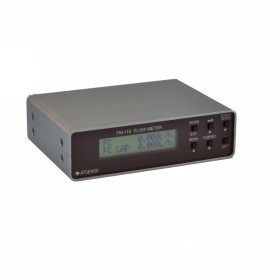
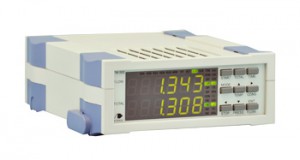
The ATSENSE FM-500 uses two fuel-flow detector inputs to calculate net fuel consumption as supply flow minus return flow in engines with a fuel return circuit.
By measuring supply and return fuel flow in the same instrument, the FM-500 provides instantaneous consumption and accumulated consumption information without treating returned fuel as fuel actually consumed. This design is intended for engine development and vehicle fuel-system evaluations.
2 Inputs
Supply-line and return-line detectors
Supply − Return
Net consumption calculation
1 ms
Fast instantaneous analog response
USB + Pulse
Data output and fuel totalization
The FM-500 supports high-speed instantaneous-consumption analog output and USB transfer of display data. The manufacturer also lists a fuel-volume pulse output for every 1 mL of totalized flow and optional temperature/pressure monitoring.
A return-line measurement arrangement is particularly useful when high circulation flow would otherwise mask the actual fuel-use rate. Measurement performance and detector compatibility must be evaluated for the complete system rather than the meter alone.
Two Flow-Detector Inputs
Connect detectors in both supply and return fuel lines for differential consumption measurement.
Net Fuel-Use Calculation
Computes instantaneous and accumulated fuel consumption from supply flow minus return flow.
Fast Analog Response
Instantaneous-consumption analog updates can respond at 1 ms intervals.
USB Data Transfer
Exports displayed values over USB mini-B for downstream logging and analysis.
Totalized-Fuel Pulse Output
Provides one pulse per 1 mL of accumulated fuel consumption for external monitoring.
Vehicle-Ready DC Operation
Operates on 9–32 V DC, with compact packaging and a key lock to reduce accidental setting changes.
Return-Line Engine Fuel Testing
Measure net consumption in engines that circulate unused fuel back to the supply.
Engine Dynamometer Development
Track engine fuel-use behavior under changing speed and load conditions.
Supply and Return Flow Comparison
Compare the two detector inputs to identify net fuel consumption over time.
Transient Fuel-Use Evaluation
Capture rapid changes in calculated instantaneous consumption through analog output.
Total Fuel Consumption Tracking
Log accumulated net fuel use using pulse output or USB data.
Vehicle Fuel-System R&D
Integrate differential fuel measurement into automotive research setups.
| Specification | FM-500 |
|---|---|
| Fuel Sensor Inputs | 2 (supply and return) |
| Primary Calculation | Net flow = supply flow − return flow |
| Measured Outputs | Instantaneous and total fuel consumption |
| Display | 6-digit × 2-line, 7-segment LCD |
| Instantaneous Flow Display | −99.999 to 999.999 L/h |
| Total Flow Display | −99,999.999 to 999,999.999 L |
| Display Refresh | 0.1 s |
| Meter Flow Accuracy (Excludes Sensor) | ±100 ppm of reading ±2 digits |
| Flow Sensor Pulse Format | A/B phase or UP/DOWN |
| Flow Input Frequency | 15 kHz |
| Sensor Supply | 12 V; 100 mA max. for each supply/return channel |
| Analog Output | ±10 V, 16-bit D/A; manufacturer lists 5 BNC output connectors |
| Instantaneous Consumption Analog Update | 1 ms switching (0.1 s measurement/display refresh) |
| Analog Output Accuracy | ±0.1% FS |
| Pulse Output | 0–5 V; 1 pulse per mL of total flow |
| USB Interface | USB mini-B |
| Temperature Sensor Input | Pt100, 3-wire |
| Pressure Sensor Input | 1–5 V (3 V = 0 kPa) |
| Power Supply | DC 9–32 V, 10 W max. |
| Dimensions | W184 × H70 × D196 mm (excluding projections) |
| Mass | Approx. 810 g |
| Operating Environment | 0–40°C; 85% RH max. (noncondensing) |
The meter’s accuracy excludes detector accuracy. Manufacturer feature text describes two measurement-output channels while its detailed specification lists five BNC analog output connectors; confirm available assignments and purchased configuration. Temperature/pressure functions are optional.