


Precision OCV and AC-IR Testing for EV Battery Cell Grading
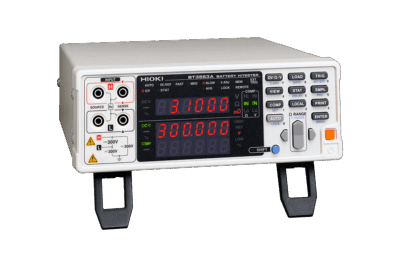
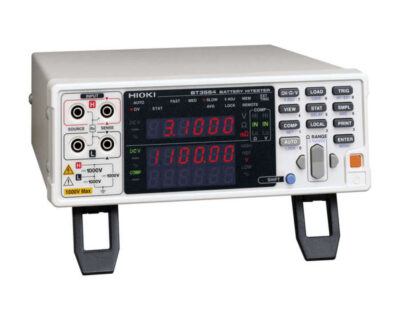
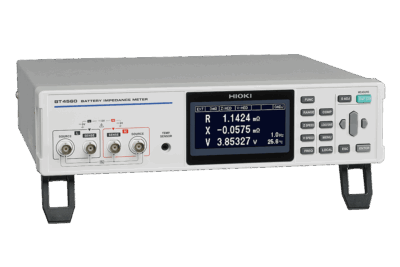
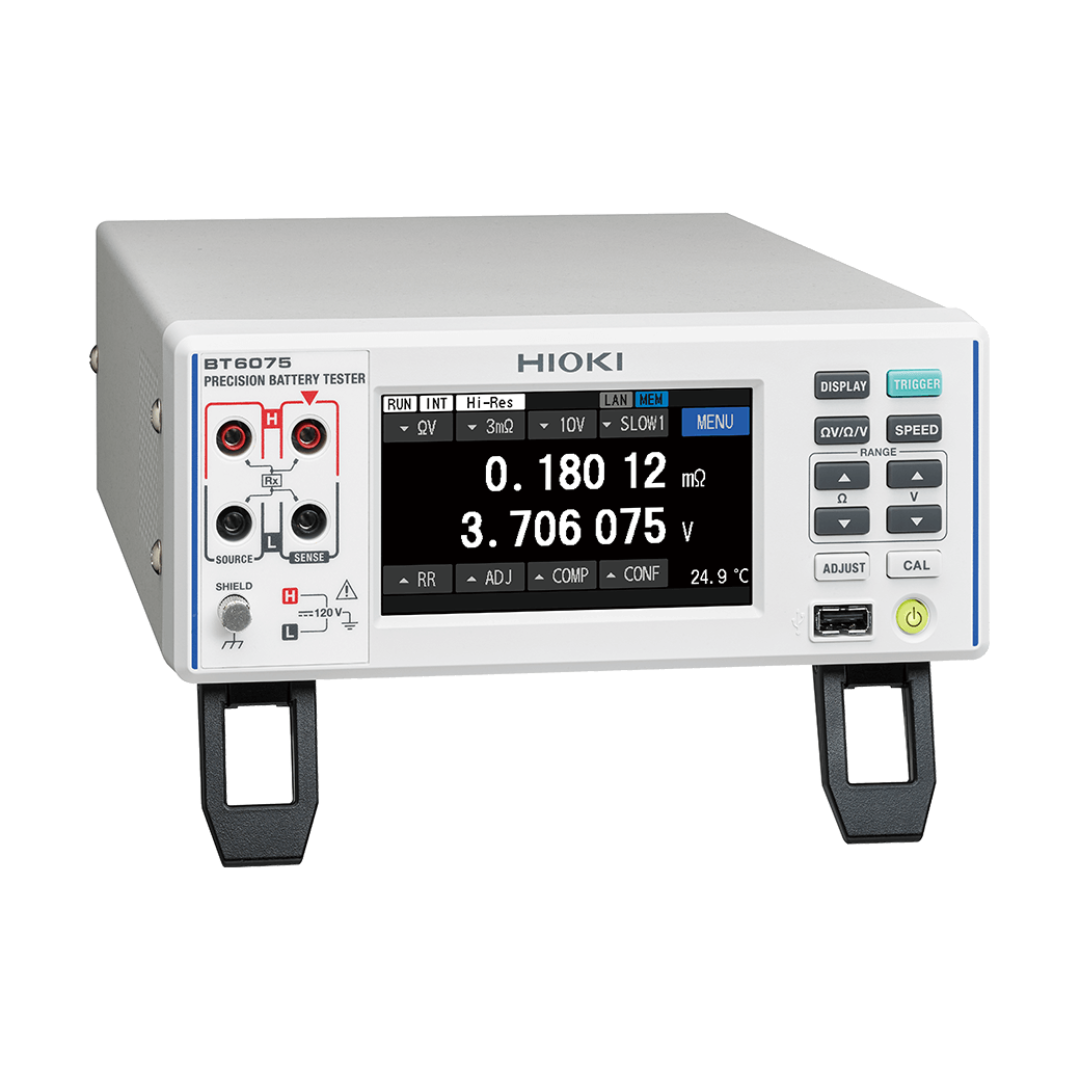
The HIOKI BT6065 and BT6075 precision battery testers measure open-circuit voltage (OCV) and AC internal resistance (AC-IR) of low-resistance, high-capacity lithium-ion battery cells for production-line inspection and grading.
Both models deliver resistance measurement resolution as fine as 0.01 μΩ (10 nΩ) in high-resolution mode and 1 kHz AC resistance measurement. The BT6065 offers DC voltage resolution down to 10 μV, while the BT6075 improves the minimum DC voltage resolution to 1 μV.
0.01 μΩ
Minimum AC-IR measurement resolution on both models
1 μV
BT6075 minimum DC voltage resolution
4 ms
Fastest selectable sampling time
528 Channels
Reference-adjustment and zero-adjustment support
Mutual Interference Reduction (MIR) mode helps maintain consistent results when two nearby testers measure in parallel. Reference adjustment compensates for eddy-current effects from neighboring metal battery enclosures, and route-resistance monitoring helps identify wiring or probe deterioration.
The instruments support LAN, USB, RS-232C and EXT. I/O integration. The BT6065 is suited to in-line formation/aging inspection, while the BT6075 targets higher-resolution cell grading at beginning- and end-of-line test points.
10 nΩ Resistance Resolution
High-resolution mode measures AC internal resistance at increments as small as 0.01 μΩ.
Model-Specific Voltage Precision
BT6065 reaches 10 μV DCV resolution; BT6075 reaches 1 μV for tighter voltage grading.
Fast Inspection Sampling
Selectable sampling periods start at 4 ms, with approximately 8 ms response time under specified conditions.
Mutual Interference Reduction
MIR mode reduces coupling effects when two testers operate close to each other in parallel.
528-Channel Reference Adjustment
Reference and zero adjustments account for multi-channel testing and nearby battery enclosure effects.
Route-Resistance Monitoring
Tracks fixture and probe circuit resistance with warning and failure thresholds to help prevent downtime.
EV Battery Cell Grading
Differentiate low-resistance cells using precise OCV and AC-IR results.
Formation and Aging Inspection
Use BT6065 for in-line quality checks after formation and aging processes.
Beginning-of-Line Cell Screening
Apply BT6075 high-resolution DC voltage measurement for fine initial cell sorting.
End-of-Line Cell Inspection
Combine AC-IR, OCV and decision logic in final cell quality assessment.
Parallel Battery Test Stations
Use MIR mode to stabilize readings from testers operating side by side.
Multi-Channel Automated Inspection
Compensate for wiring routes and nearby cell effects in multiplexed production fixtures.
| Specification | BT6065 | BT6075 |
|---|---|---|
| AC-IR Measurement Method | 1 kHz AC four-terminal | 1 kHz AC four-terminal |
| Resistance Ranges | 3 mΩ, 30 mΩ, 300 mΩ, 3 Ω, 30 Ω | 3 mΩ, 30 mΩ, 300 mΩ, 3 Ω, 30 Ω |
| Minimum AC-IR Resolution | 0.01 μΩ (10 nΩ) | 0.01 μΩ (10 nΩ) |
| 3 mΩ Range Accuracy (300 mA, SLOW2) | ±0.08% rdg. ±0.08 μΩ | ±0.08% rdg. ±0.08 μΩ |
| DC Voltage Ranges | 10 V and 100 V | 10 V and 100 V |
| Minimum DCV Resolution (10 V Range) | 10 μV | 1 μV |
| DCV Accuracy (10 V Range, SLOW2) | ±0.002% rdg. ±20 μV | ±0.0012% rdg. ±11 μV |
| Display Digits | 6½ digits | 7½ digits |
| Sampling Time, Minimum | 4 ms | 4 ms |
| Response Time | Approx. 8 ms (specified conditions) | Approx. 8 ms (specified conditions) |
| MIR Mode | Supported | Supported |
| Reference/Zero Adjustment | Up to 528 channels | Up to 528 channels |
| Route-Resistance Monitor | Supported | Supported |
| Communication | LAN, USB-C, USB-A, RS-232C, EXT. I/O | LAN, USB-C, USB-A, RS-232C, EXT. I/O |
| Power Supply | 100–240 V AC, 50/60 Hz | 100–240 V AC, 50/60 Hz |
| Maximum Rated Power | 40 VA | 40 VA |
| Dimensions | Approx. 215 W × 88 H × 313 D mm | Approx. 215 W × 88 H × 313 D mm |
| Mass | Approx. 3.1 kg | Approx. 3.1 kg |
Accuracy values above are specified for the indicated range, measurement current and SLOW2 setting. Resistance 0.01 μΩ resolution requires high-resolution mode. Select the model based on the required DC voltage resolution and grading tolerance.