Home » Solutions » EV Power Electronics Testing Solutions

OBC · DC-DC · Inverter · Battery Simulation

EV Power Electronics Testing Solutions

Configure test systems for EV on-board chargers, DC-DC converters, traction inverters, and battery simulation. Explore KIKUSUI programmable sources, bidirectional DC systems, regenerative loads, and electronic loads based on voltage, current, power, transient behavior, and the required direction of power flow.Discuss Your Test RequirementsView KIKUSUI Products

Start with the EV component you need to test, then identify the source, load, voltage range, power-flow direction, and dynamic behavior required by your test setup.

FIND YOUR TEST SETUP

What do you need to test?

Choose the EV power-electronics application that best matches your DUT and required direction of power flow.

Selected test application On-Board Charger Testing

EV on-board charger validation

On-Board Charger Testing

Test EV on-board chargers with controlled AC input conditions and programmable DC-side loading, battery simulation, or bidirectional power flow.

Typical applications

  • Unidirectional OBC development
  • Bidirectional OBC evaluation
  • AC grid-condition simulation
  • High-voltage DC output testing

Recommended for this test setup

Recommended KIKUSUI Products

AC Grid Simulation
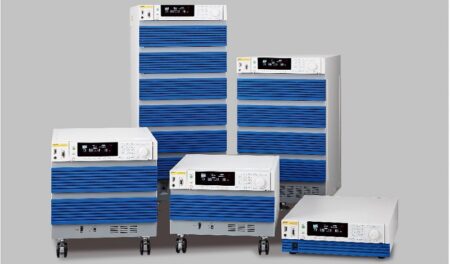
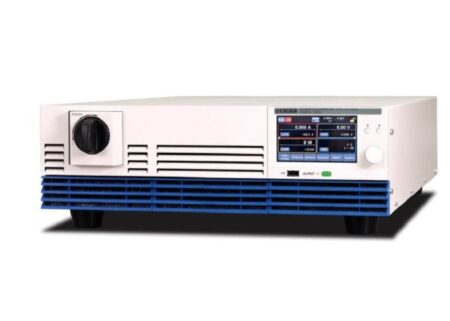
KIKUSUI PCR-WEA/WEA2 Series Ultra-Compact AC/DC Programmable Power Supplies

KIKUSUI PCR-WEA/WEA2 Series Ultra-Compact AC/DC Programmable Power Supplies

Programmable AC/DC power platform for reproducing controlled input voltage, frequency, waveform, and power-line conditions at the AC side of an on-board charger.

View PCR-WEA / WEA2
Bidirectional DC
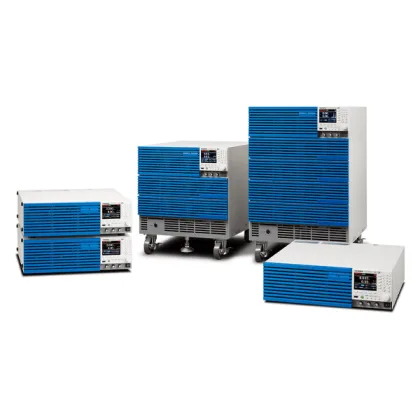
KIKUSUI PXB Series Bidirectional High-Capacity DC Power Supply

KIKUSUI PXB Series Bidirectional High-Capacity DC Power Supply

Bidirectional high-capacity DC source for battery-side simulation, source/sink operation, and regenerative testing of high-voltage OBC systems.

View PXB Series
High-Voltage DC Load
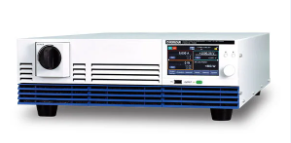
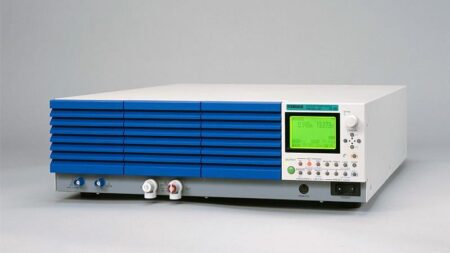
KIKUSUI PLZ-5WH2 Series High-Voltage High-Capacity Electronic Loads

KIKUSUI PLZ-5WH2 Series High-Voltage High-Capacity Electronic Loads

High-voltage DC electronic load for controlled OBC output loading when battery emulation or bidirectional DC operation is not required.

View PLZ-5WH2
Selected test application DC-DC Converter Testing

Automotive DC-DC converter validation

Automotive DC-DC Converter Testing

Evaluate automotive DC-DC converters with programmable DC input conditions and controlled static or dynamic loading at the converter output.

Typical applications

  • HV-to-LV converter development
  • Input-voltage variation testing
  • Load and efficiency evaluation
  • Dynamic and transient load testing

Recommended for this test setup

Recommended KIKUSUI Products

Programmable DC Source
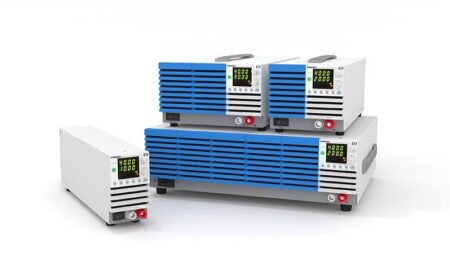
KIKUSUI PWR-01 Series Compact Wide-Range DC Power Supply

KIKUSUI PWR-01 Series Compact Wide-Range DC Power Supply

Wide-range programmable DC source for general converter development and input-side power simulation where bidirectional operation is not required.

View PWR-01 Series
Bidirectional DC
KIKUSUI PXB Series Bidirectional High-Capacity DC Power Supply

KIKUSUI PXB Series Bidirectional High-Capacity DC Power Supply

High-power bidirectional source for converters requiring reverse power flow, regenerative operation, or controlled high-voltage DC bus simulation.

View PXB Series
Dynamic DC Load
KIKUSUI PLZ-5WH2 Series High-Voltage High-Capacity Electronic Loads

KIKUSUI PLZ-5WH2 Series High-Voltage High-Capacity Electronic Loads

High-voltage electronic load for converter output characterization, load steps, transient testing, and high-power DC validation.

View PLZ-5WH2
Regenerative Load
KIKUSUI PXZ Series High-Capacity Regenerative Electronic Load

KIKUSUI PXZ Series High-Capacity Regenerative Electronic Load

Regenerative electronic load for repeated or high-power converter testing where reducing heat dissipation and returning absorbed energy are beneficial.

View PXZ Series
Selected test application EV Inverter Testing

Traction inverter and DC-bus validation

EV Inverter Testing & Battery-Side Simulation

Create controlled and repeatable high-voltage DC conditions for traction inverter development while supporting both power delivery and regenerative energy flow.

Typical applications

  • Traction inverter development
  • High-voltage DC bus simulation
  • Regenerative operation testing
  • Repeatable battery-side conditions

Recommended for this test setup

Recommended KIKUSUI Products

Battery / DC Bus Simulation
KIKUSUI PXB Series Bidirectional High-Capacity DC Power Supply

KIKUSUI PXB Series Bidirectional High-Capacity DC Power Supply

High-voltage bidirectional DC platform for replacing the physical battery during inverter evaluation and handling regenerative power from the DUT.

View PXB Series
Dynamic Ripple Source
KIKUSUI PBZ Series Intelligent Bipolar Power Supply

KIKUSUI PBZ Series Intelligent Bipolar Power Supply

Four-quadrant bipolar source for dynamic voltage and ripple-related test conditions where fast waveform generation and source/sink behavior are required.

View PBZ Series
High-Voltage Load
KIKUSUI PLZ-5WH2 Series High-Voltage High-Capacity Electronic Loads

KIKUSUI PLZ-5WH2 Series High-Voltage High-Capacity Electronic Loads

High-voltage load platform for auxiliary inverter and power-electronics evaluation requiring controlled high-speed DC loading.

View PLZ-5WH2
Selected test application Battery Simulation

Repeatable EV battery emulation

Battery Simulation for EV Component Testing

Replace a physical battery with controlled source/sink behavior to create repeatable electrical conditions for OBC, inverter, converter, and other battery-connected component testing.

Typical applications

  • Battery-connected ECU development
  • OBC and inverter validation
  • Repeatable SOC-based test conditions
  • Automated EV component testing

Recommended for this test setup

Recommended KIKUSUI Products

Bidirectional Battery Simulation
KIKUSUI PXB Series Bidirectional High-Capacity DC Power Supply

KIKUSUI PXB Series Bidirectional High-Capacity DC Power Supply

Bidirectional DC platform capable of sourcing and sinking power for repeatable battery-connected component evaluation.

View PXB Series

EV Power Test Workflow

Define the Electrical Requirement Before the Instrument

EV power-electronics test systems should be selected from the electrical behavior of the DUT rather than from a product family alone. Define the voltage, current, power, direction of energy flow, and required dynamics before choosing the source and load architecture.

  1. 1. Define the DUT Identify whether you are testing an OBC, DC-DC converter, traction inverter, battery-connected ECU, or another power-electronics component.
  2. 2. Define Power Flow Determine whether the DUT requires source-only, load-only, or bidirectional source-and-sink operation.
  3. 3. Define Electrical Range Establish minimum and maximum voltage, current, continuous power, peak power, and expected transient conditions.
  4. 4. Choose the Architecture Select the appropriate programmable AC source, DC source, bidirectional DC supply, electronic load, or regenerative load combination.

EV Power Electronics Test Applications

Match the Power Architecture to the Device Under Test

An EV power-electronics test system may require a programmable source, an electronic load, a regenerative load, or a bidirectional source-and-sink platform. Start with the DUT and the direction of power flow, then define voltage, current, continuous and peak power, transient behavior, and automation requirements.

On-Board Charger Testing

Reproduce AC input conditions and apply controlled DC-side loading or battery emulation.

Programmable AC SourceOn-Board ChargerDC Load or Battery Simulator

DC-DC Converter Testing

Control the converter input while evaluating output regulation, efficiency, and load transients.

Programmable DC SourceDC-DC ConverterElectronic or Regenerative Load

EV Inverter Testing

Create a repeatable high-voltage DC bus and manage power returned by a regenerative DUT.

Bidirectional DC SourceEV Inverter

Battery Simulation

Replace a physical battery with controlled source-and-sink behavior for repeatable component validation.

Battery SimulatorBattery-Connected DUT

Source, Sink, Regenerative, and Bidirectional Operation

Choose the Required Direction of Power Flow

The correct architecture depends on whether the instrument must deliver power, absorb power, or do both. Product-specific operating modes and ratings should always be confirmed before final selection.

ArchitectureDelivers powerAbsorbs powerTypical EV test use
Programmable sourceYesNoControlled AC or DC input conditions
Electronic loadNoYesDUT output loading and transient evaluation
Regenerative loadNoYes, with energy returned to the facilityRepeated high-power loading where supported
Bidirectional power supplyYesYesBattery simulation and regenerative DUT evaluation

Frequently Asked Questions

EV Power Electronics Testing FAQ

What equipment is required to test an EV on-board charger?

A typical OBC test setup uses a programmable AC source to reproduce grid-side conditions and a DC electronic load or bidirectional DC supply on the battery side. The correct instruments depend on input type, output voltage and current, power level, power-flow direction, transient requirements, and whether battery emulation or regenerative operation is needed.

What is the difference between a bidirectional power supply and a DC electronic load?

A DC electronic load absorbs power from a DUT. A bidirectional power supply can both source and sink power, making it suitable for applications such as battery simulation and testing devices that may return energy. Available operating modes and regenerative behavior vary by product.

How is a battery simulator used for EV component testing?

A battery simulator replaces a physical battery with controlled and repeatable electrical behavior. It can help evaluate OBCs, inverters, DC-DC converters, and battery-connected controllers across defined voltage conditions without relying on the state and availability of a real battery.

When is regenerative operation useful?

Regenerative operation is useful when the DUT or load returns significant energy during testing. A compatible regenerative instrument can return absorbed energy to the facility rather than dissipating all of it as heat, subject to the instrument, installation, and facility requirements.

What specifications should be defined before selecting test equipment?

Define the DUT, minimum and maximum voltage, current, continuous and peak power, source-only, sink-only, or bidirectional operation, expected transients, required response behavior, interfaces, automation needs, and applicable safety or isolation requirements.

Application Support

Need help configuring an EV power electronics test system?

Share your DUT, input and output voltage range, maximum current, continuous and peak power, source or sink requirement, transient conditions, and automation needs. Denkei Americas can help narrow the appropriate KIKUSUI source and load configuration.