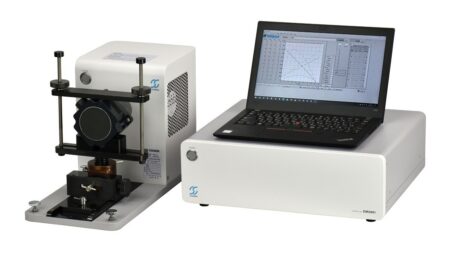
Motor dynamometer applications
Motor Torque Testing for Development, Durability, and Production
A motor dynamometer applies a controlled mechanical load while torque and rotational speed are measured. The resulting data can be used to characterize motor performance, reproduce operating conditions, verify production limits, and calculate mechanical output. With a supported external power meter, the DM5001 workflow can also combine mechanical measurements with voltage, current, power, efficiency, power factor, and frequency data.
Torque-Speed Characterization
Evaluate how torque changes with rotational speed and controlled load. DM5001 provides torque, speed, and brake control modes for development and comparison testing.
Load Profile & Durability Testing
Create sequences that combine test and idle conditions and repeat them for durability evaluation. External analog signals can also be captured when the optional I/O configuration is used.
Production Pass / Fail Inspection
Define upper and lower limits for torque, rotational speed, or braking measurements and record inspection results for repeatable production-quality workflows.
Mechanical & Electrical Performance
Combine torque and speed with a supported power analyzer when the test requires electrical input measurements and motor efficiency evaluation.
Sugawara HB Series
A Broad Hysteresis-Brake Dynamometer Range for Motor Torque Measurement
The DM5001 controller is used with Sugawara HB Series dynamometers. The available lineup is designed to cover a broad range of small- and medium-torque motor testing requirements while preserving controlled torque and speed measurement.
13 ModelsHB Series dynamometer lineup
5 mN·m–50 N·mRated torque range across the HB lineup
Up to 60,000 rpmHB-50MN / HB-100MN / HB-200MN no-load maximum speed
±0.1% FSSystem torque accuracy after calibration
Measurement architecture
How the DM5001 / HB Motor Dynamometer System Measures Motor Performance
The HB Series uses a hysteresis brake as the dynamometer load. DM5001 measures torque and rotational speed while controlling the test point through torque servo-control, speed servo-control, or open-loop brake-current control. Mechanical output is derived from torque and speed.
Torque Measurement
DM5001 uses a 1 ms sampling rate with a 16-bit A/D converter and a 100 ms moving average. System torque accuracy is specified as ±0.1% of full scale after calibration.
Rotational Speed
Rotational-speed accuracy is specified as ±0.01% ±2 digits. The allowable maximum speed depends on the selected HB dynamometer model.
Load Control
Available control parameters include torque servo-control, rotational-speed servo-control, and open-loop brake-current control.
Power & Efficiency
Supported Yokogawa and HIOKI power meters can be connected when voltage, current, electrical power, efficiency, power factor, and frequency need to be evaluated with the mechanical data.
How to select
How to Select a Motor Torque Tester or Dynamometer
Do not select a dynamometer from a single peak-torque number. The motor's torque-speed envelope, mechanical power, test duration, fixture, coupling, automation requirements, and measurement objective all affect system selection.
| Selection factor |
What to confirm |
DM5001 / HB consideration |
| Torque range |
Nominal, peak, starting, and target measurement torque |
13 HB models span 5 mN·m to 50 N·m rated torque. |
| Maximum speed |
Highest rpm at each required torque or load point |
HB-50MN / 100MN / 200MN support no-load speeds up to 60,000 rpm. Higher-speed requirements should be evaluated with Sugawara's dedicated high-speed motor systems. |
| Control mode |
Constant torque, constant speed, or direct brake control |
Torque servo, speed servo, and open-loop brake-current control are available. |
| Test sequence |
Single point, swept performance, repeat profile, durability, or inspection |
TORQuick workflows support sequence-based testing, durability cycles, manual observation, and inspection modes. |
| External measurements |
Temperature, airflow, voltage signals, electrical power, efficiency |
Optional analog I/O can acquire external 0–10 V sensor signals; supported power meters can supply electrical measurements. |
| Production integration |
Pass/fail criteria, I/O, power-supply control, result files |
Optional digital/analog I/O and contact output support production-oriented workflows. |
Automation and production use
Automated Motor Test Sequences, External I/O, and Pass / Fail Evaluation
DM5001 is not limited to manually observing a single torque point. The system supports sequence-based load testing and an inspection mode for production-oriented pass/fail evaluation.
Repeat Test Sequences
Test conditions and idle conditions can be combined into repeatable sequences. Sugawara describes durability workflows that can repeat the sequence up to 10,000 cycles.
Pass / Fail Limits
Inspection mode can apply up to five upper and lower limit settings to measurement items based on torque, rotational speed, or braking conditions.
External Sensor Inputs
With the optional I/O configuration, four analog 0–10 V inputs can acquire signals from external sensors such as temperature or flow sensors and include those signals in stored measurement data.
External Power-Supply Control
Optional contact and analog outputs can coordinate an external motor power supply, including on/off control and voltage changes when the connected supply provides a suitable analog-control input.
Related motor testing solutions
Motor torque is the pillar topic, but several measurement problems deserve their own test method and Solution page. Use the related path that matches the actual engineering question.
Frequently asked questions
Motor Torque Testing FAQ
What is a motor dynamometer used for?
A motor dynamometer applies a controlled mechanical load to a rotating motor while torque and rotational speed are measured. This allows engineers to evaluate torque-speed behavior, mechanical output, repeatable load conditions, and production limits.
What torque range does the Sugawara HB Series cover?
The HB Series consists of 13 dynamometer models with rated torque ranging from 5 mN·m to 50 N·m. The correct model should be selected from both the required torque and rotational-speed operating envelope.
Can the HB Series test motors at 60,000 rpm?
Selected HB-50MN, HB-100MN, and HB-200MN models are specified for a maximum no-load rotational speed of 60,000 rpm. The permissible operating point still depends on the selected dynamometer and torque condition. For requirements beyond the HB range, use the dedicated High-Speed Motor Testing solution.
Can DM5001 automate a motor load profile?
Yes. DM5001/TORQuick workflows can control torque, rotational speed, or braking conditions in a sequence and can combine test and idle conditions for repeated durability testing.
Can DM5001 perform pass / fail motor inspection?
Yes. Its inspection mode supports upper and lower limits for measurement items based on torque, rotational speed, or braking, and can save measurement results for production inspection workflows.
Can motor efficiency be measured with the system?
Mechanical output is derived from measured torque and rotational speed. When a supported external power meter is connected, the workflow can also obtain voltage, current, electrical power, efficiency, power factor, and frequency information.
What information should I provide when requesting a motor dynamometer?
Provide the motor type, nominal and peak torque, maximum rotational speed, approximate power level, continuous or short-duration duty, required load profile or control mode, electrical measurement needs, coupling or fixture constraints, and whether the test is for R&D, durability, or production inspection.
U.S. application support
Discuss Your Motor Testing Application
Share your motor type, torque range, maximum speed, duty cycle, test objective, and automation requirements. Denkei Corporation Americas can help identify a suitable Sugawara motor dynamometer and DM5001 / HB configuration.
Discuss Your Motor Testing Application