




Real-Time Industrial IoT Data Streaming and Time-Series Management
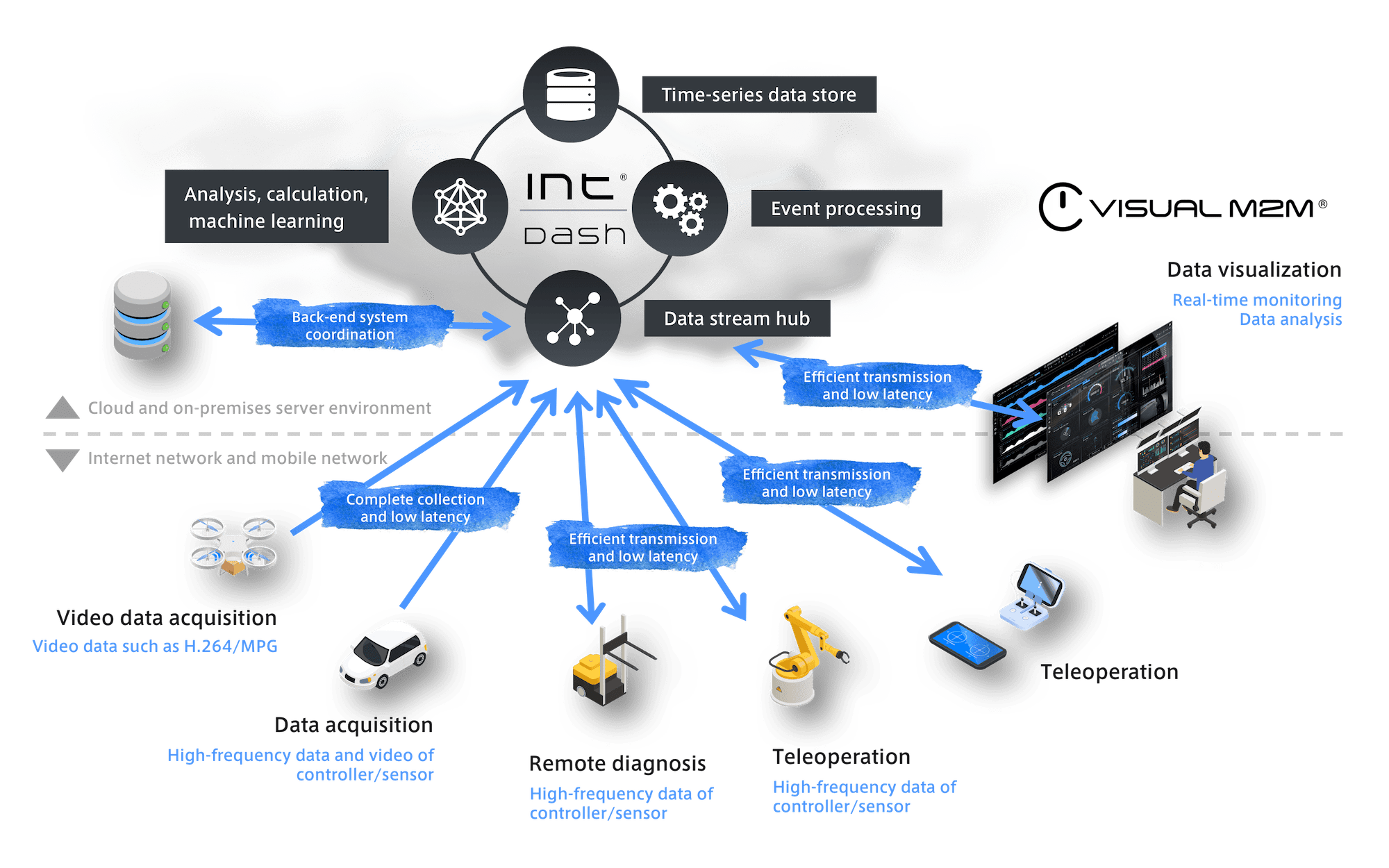
aptpod intdash connects vehicles, robots and industrial equipment through bidirectional streaming of high-frequency time-series data, with synchronized timestamps, server-side storage and recovery after network interruptions.
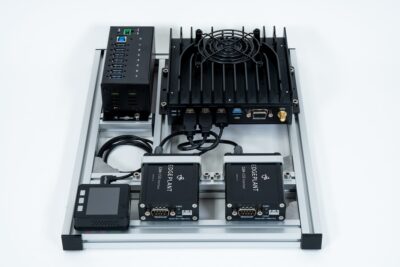
intdash transports data generated at intervals of approximately 1–100 milliseconds over best-effort networks, including mobile connections. The platform uses the proprietary iSCP protocol to exchange streaming data between edge devices and servers.
1–100 ms
Typical source-data generation intervals
Two-Way
Bidirectional, many-to-many data streaming
iSCP
Proprietary data streaming protocol
Auto-Retry
Queued data retransmission after reconnection
Data from different devices and formats can be encapsulated in a common time-series structure. Timestamp processing helps align sensor measurements, control signals, video and audio with a shared time axis.
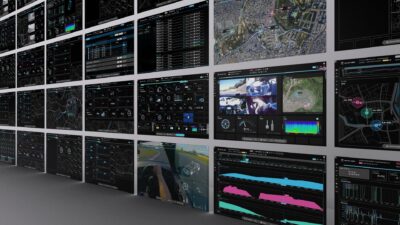
Collected streams are stored in the intdash time-series datastore and can be used by Visual M2M Data Visualizer, software applications and analysis services. The 1–100 ms figure describes incoming data intervals, not guaranteed network latency.
Bidirectional Real-Time Streaming
Moves industrial data in both directions between edge devices, applications and the intermediary server.
High-Frequency Time-Series Support
Handles data generated at intervals of approximately 1–100 milliseconds in industrial measurement applications.
iSCP Data Transport
Uses the proprietary intdash Stream Control Protocol for streaming, transmission efficiency and rate management.
Timestamp Alignment and Data Fusion
Normalizes timing information across sensor signals, control data, video and audio to support synchronized analysis.
Automatic Retransmission After Outages
Queues data at the edge during disrupted connectivity and resends buffered data when the connection is restored.
Time-Series Storage and Application Access
Stores streamed data for subsequent visualization, application processing and analytics workflows.
Automotive R&D Data Acquisition
Stream and retain vehicle sensor and control-bus measurements during development and validation.
Remote Equipment Monitoring
Observe industrial machines and field equipment across mobile or constrained networks.
Remote Fault Diagnosis
Collect operating histories and time-aligned measurements for troubleshooting equipment faults.
Robotics and Heavy Equipment
Exchange control and telemetry data between mobile machines, robots and remote systems.
Industrial Sensor Data Fusion
Combine heterogeneous time-series sources with consistent timestamp management.
Distributed Test and Validation
Enable engineers to review measurement data from geographically separated instruments and test sites.
| Capability | Published Description |
|---|---|
| Platform Type | Bidirectional industrial IoT data streaming middleware |
| Data Generation Interval | Approximately 1–100 ms for source time-series data |
| Communication Model | Many-to-many bidirectional streaming |
| Transport Protocol | iSCP (intdash Stream Control Protocol) |
| Network Environment | Best-effort networks including mobile networks and Internet connections |
| Data Types | Industrial control, sensor and media time-series streams |
| Timestamp Handling | Timestamp assignment, normalization and alignment |
| Data Fusion | Encapsulation and common time-axis management |
| Disconnection Handling | Edge queueing and retransmission when network connectivity returns |
| Data Storage | Server-based time-series datastore |
| Visualization Integration | Visual M2M Data Visualizer |
| Application Integration | Platform APIs and analytics services; deployment-dependent |
The 1–100 ms figure refers to typical source-data generation intervals, not an end-to-end latency guarantee. Streaming throughput, retention, network recovery and deployment requirements depend on system configuration.